
The journal
What is the point of cupping coffee?
A clear, concise answer to why cupping exists in coffee: a standardized way to evaluate sensory quality, catch defects, compare lots and align decisions, distinct from casual tasting.
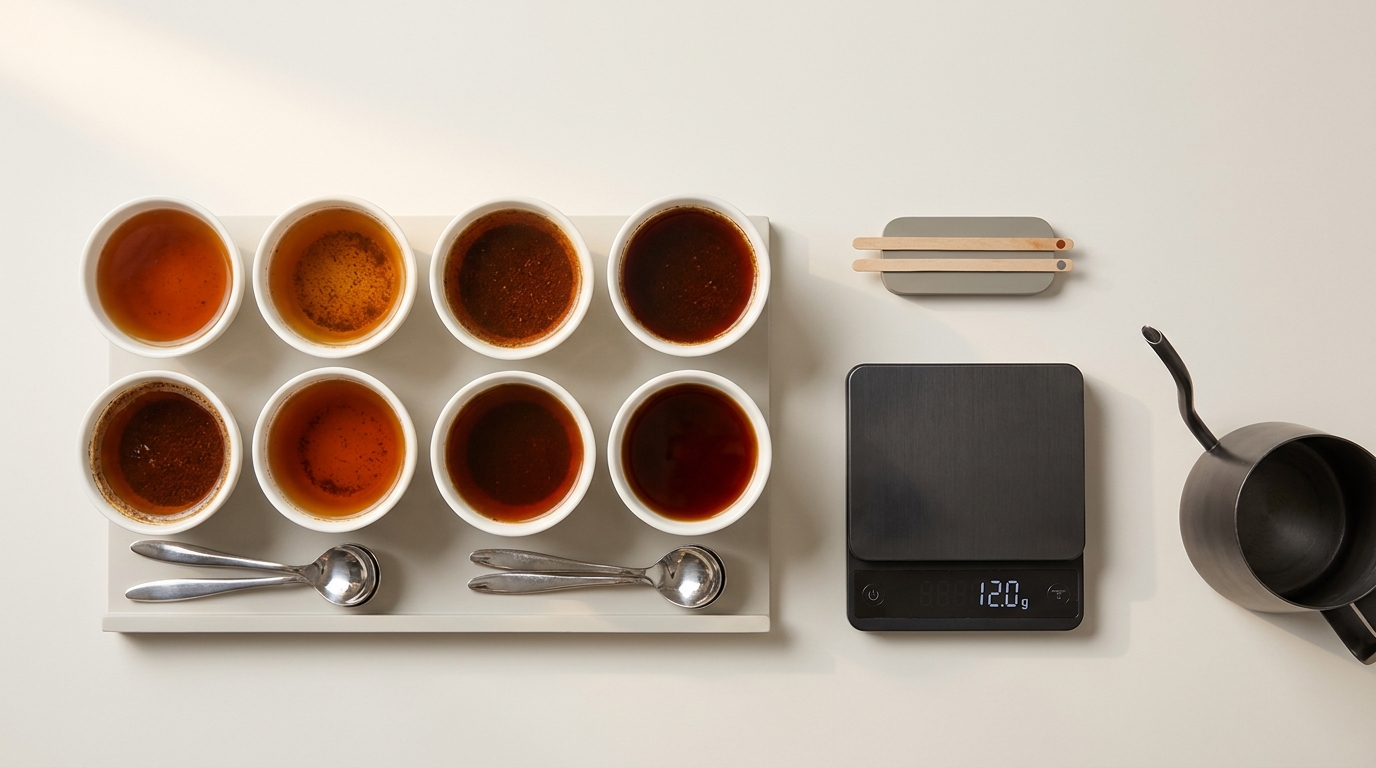
Cupping exists to evaluate coffee fairly. It standardizes how coffees are brewed and tasted side by side so buyers and roasters can compare sensory qualities, spot defects and make consistent decisions, rather than judging based on a single brew method or personal preference Ozone Coffee: What is coffee cupping?. Today, the Specialty Coffee Association’s Coffee Value Assessment frames cupping within a broader system that records descriptive attributes and affective impressions using shared terminology SCA Coffee Value Assessment.
How cupping differs from casual tasting
Casual tasting is about how you like a coffee brewed your way. Cupping controls the variables for every sample: identical dose, grind, water, steep time and tasting sequence. That lets differences come from the coffee itself, not the brew method, and creates shared notes and forms for repeatable comparisons Ozone Coffee: What is coffee cupping? SCA Standards.
What cupping actually measures
In a cupping, tasters document core sensory attributes such as fragrance and aroma, flavor, acidity, body and finish, plus any defects. Recording descriptors in a common language is the point: it enables objective comparison and useful communication across teams and time Ozone Coffee: What is coffee cupping? SCA Coffee Value Assessment.
Why controlled preparation matters
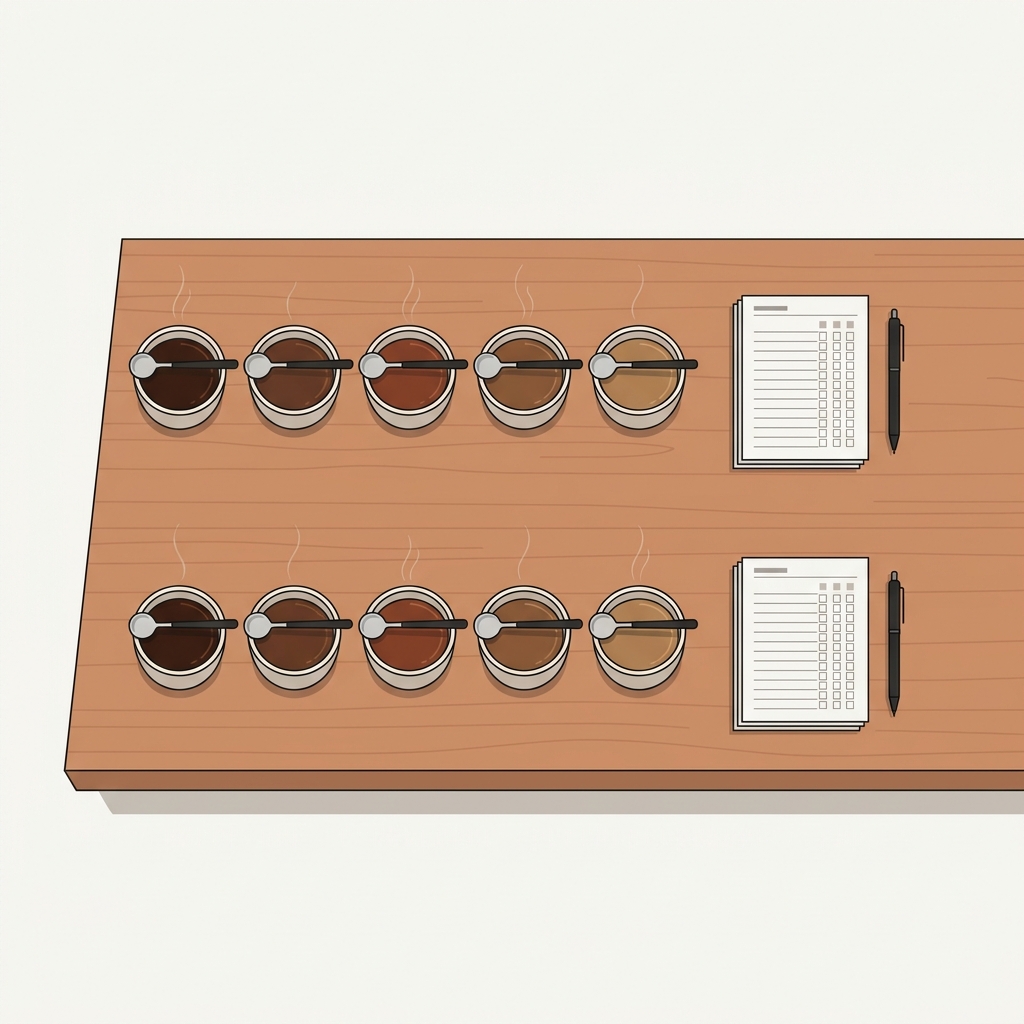
Prepare samples consistently so differences in the cups are not simply differences in grind, water, proportions or timing. Record the preparation alongside the notes. When using a formal assessment, follow its current preparation instructions rather than borrowing a ratio from a different protocol.
If you want a home-friendly walk-through of equipment and setup, see our guide: How to cup coffee at home. For brew temperature context when heating water, see The ideal water temperature for brewing coffee.
Make the comparison useful
How professionals use cupping results
Purchasing, profiling and QC
Importers and roasters rely on cupping to accept or reject lots, choose coffees for menus, build tasting notes and monitor quality over time because results are directly comparable across sessions Cafe Imports: How we cup coffee Seattle Coffee Gear: The importance of cupping.
Scoring and today’s SCA framework
Historically, many labs used the SCA cupping form with a 100-point scale, where 80+ was often described as specialty Cafe Imports: How we cup coffee. Today, the SCA Coffee Value Assessment emphasizes four complementary assessments (physical, descriptive, affective and extrinsic), explicitly moving away from reliance on a single number to describe coffee’s value SCA Coffee Value Assessment.
Limits and good practices
- Cupping is optimized for comparative evaluation under identical conditions. Use it alongside brew tests when deciding how a coffee will taste as espresso or filter for customers Ozone Coffee: What is coffee cupping?.
- Keep variables tight: consistent grind, ratio, temperature, timing and tasting order. Consistency is essential for repeatable results SCA Standards Cafe Imports: How we cup coffee.
- Record as you go. Notes lose accuracy quickly once you move to the next cup Ozone Coffee: What is coffee cupping?.
Practical wrap-up
The point of cupping is simple: it gives you a shared, repeatable way to compare coffees, document what you perceive and make better buying, roasting and quality decisions. Use the standardized brew-and-slurp format for the comparison, then validate promising coffees with brew methods your customers actually drink. That combination keeps your choices consistent, transparent and grounded in what’s in the cup Cafe Imports: How we cup coffee SCA Coffee Value Assessment.
Quick FAQs
Do I need special gear to cup?
No. You need a burr grinder, identical cups or bowls, hot water, a timer and a deep spoon. Consistency matters more than specialty equipment Cafe Imports: How we cup coffee.
Why do tasters slurp?
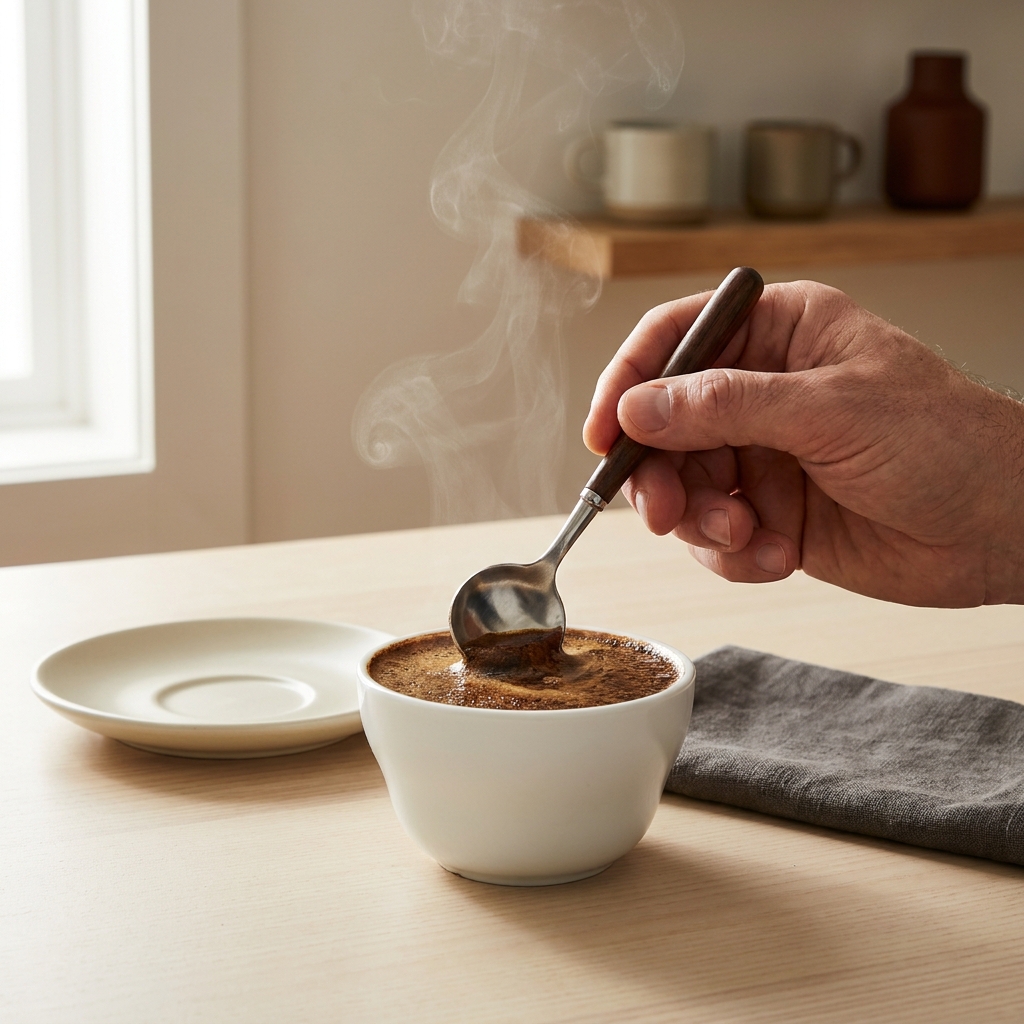
Slurping aerates the coffee and spreads it across the palate, helping you perceive aroma and taste more clearly Cafe Imports: How we cup coffee Ozone Coffee: What is coffee cupping?.