
The journal
What the timer on a coffee scale is for (and how to use it)
A clear, practical guide to what the timer does on a coffee scale and how to use it for pour-over and espresso.
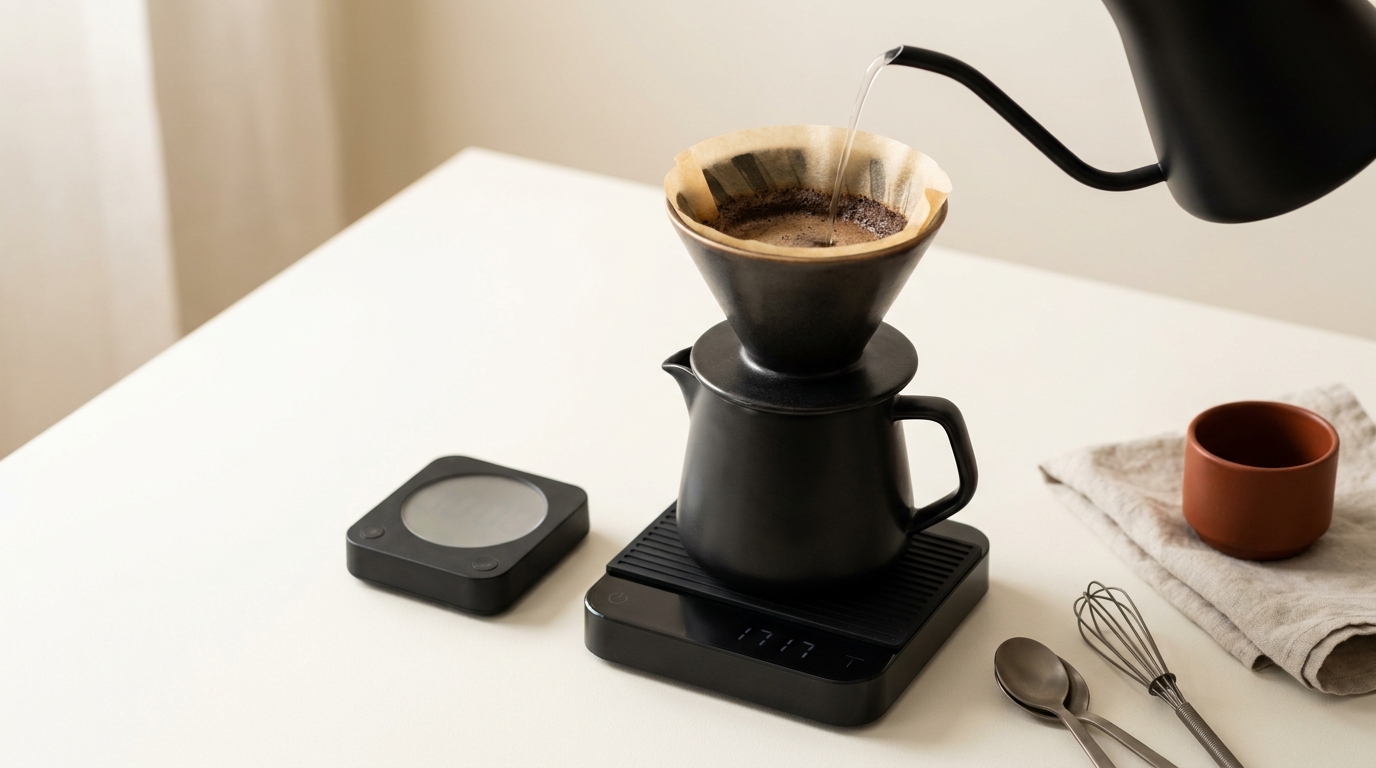
The timer on a coffee scale lets you track brew or shot time alongside live weight so you can control extraction and repeat your results. Keeping time and weight in one view helps you pace pours in filter coffee and match dose, yield and time in espresso for consistency Seattle Coffee Gear: espresso scales with timers, Podium Coffee Club: built-in timer scales.
What the timer tracks and why it matters
On a coffee-specific scale, the timer counts elapsed time while the display shows live weight. This pairing means you can see, in real time, whether you are pouring too fast or too slow for a target total time in pour-over, or whether your espresso is reaching the target yield in the target time Seattle Coffee Gear: espresso scales with timers. Some guides also note that you can choose to start timing at the first pour or first drip, depending on how you define contact time MANTABREW: timing your pour-over.
Using the timer for pour-over
Step-by-step
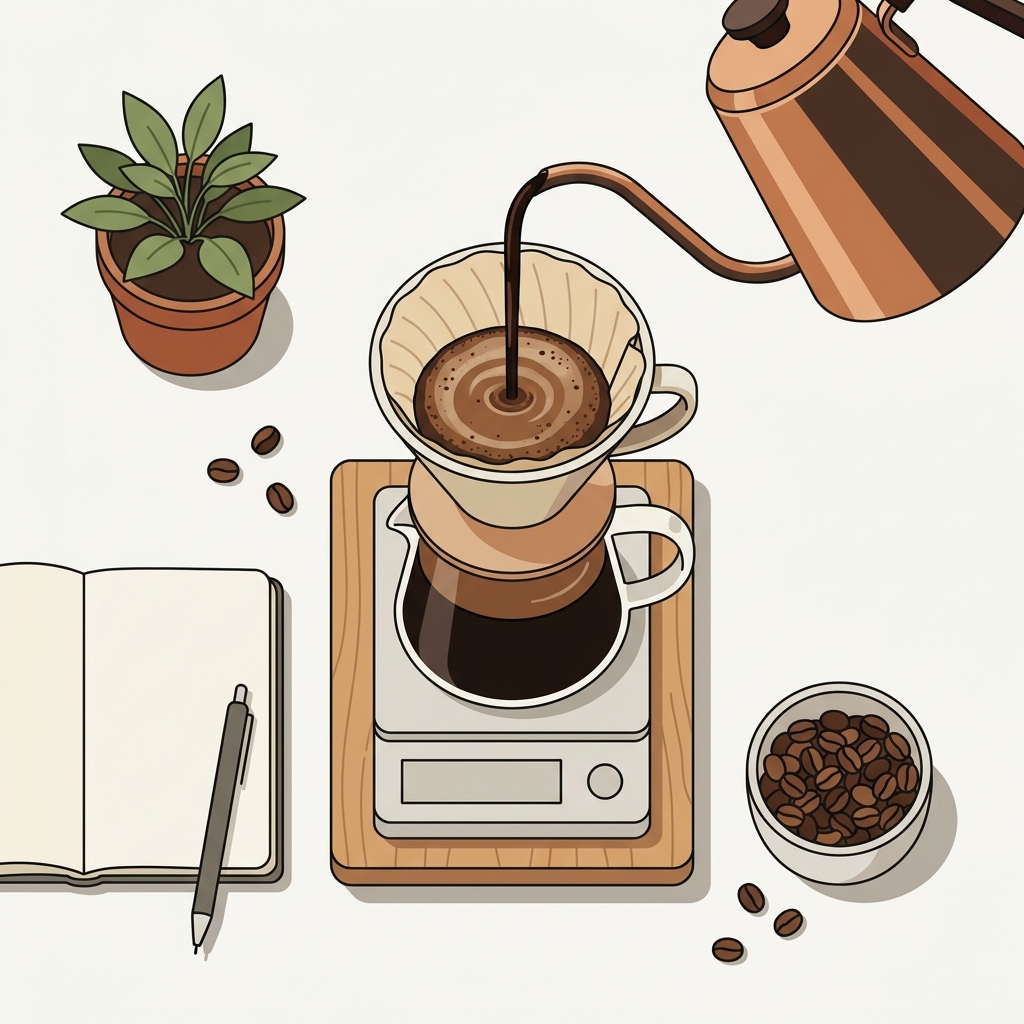
- Place brewer and cup/server on the scale and tare to zero.
- Add grounds, set your kettle, and get ready to pour.
- Start the timer at the first pour (or use auto-start if your scale supports it) and note the bloom time, then continue with your main pours.
- Stop when you reach your target total water weight; note the total brew time.
Typical pour-over guidance targets a bloom of roughly 30 to 45 seconds and a total brew time around 2:30 to 3:30, depending on method and recipe MANTABREW: timing your pour-over. If drawdown is much faster than usual and the cup tastes weak or sour, your grind may be too coarse; if drawdown is much slower and the cup tastes harsh or bitter, your grind may be too fine Podium Coffee Club: built-in timer scales.
Related reading: How long should I let my coffee grounds bloom?
Using the timer for espresso
Step-by-step
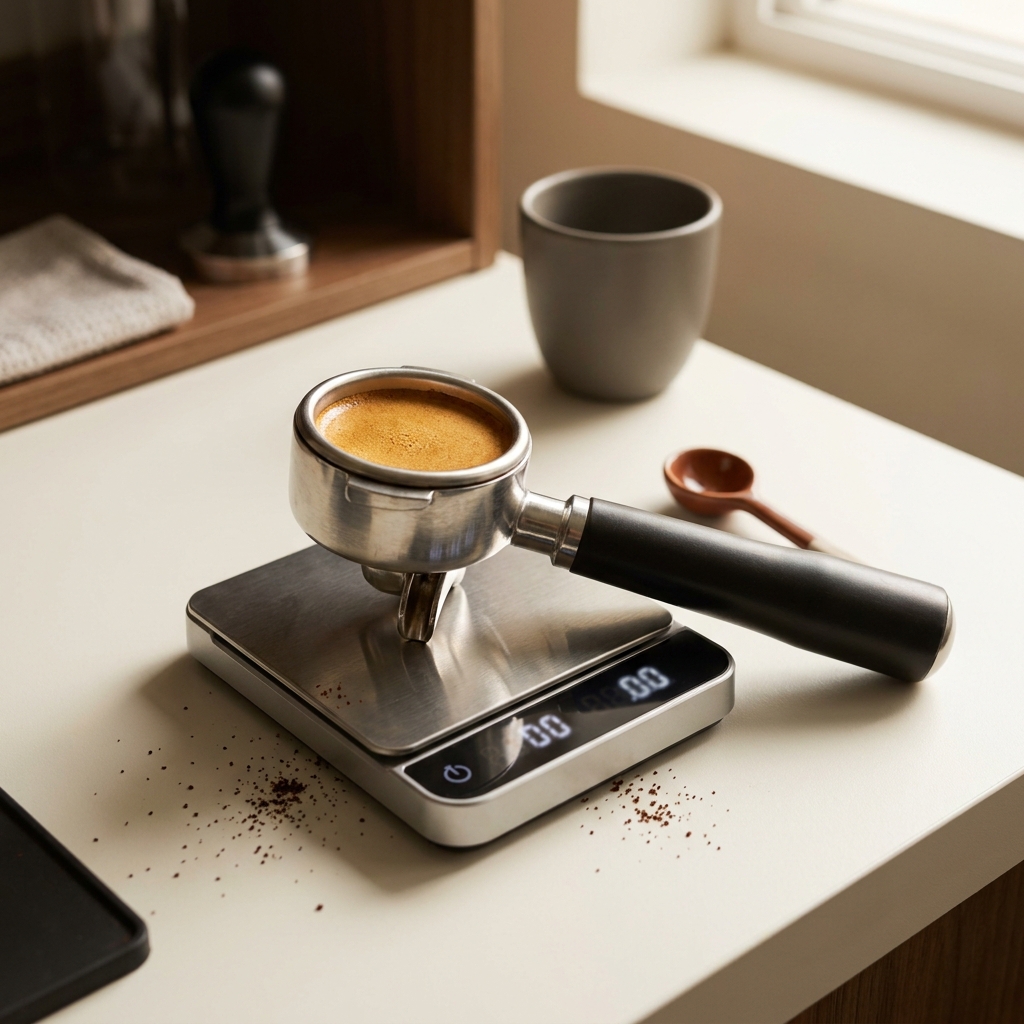
- Weigh your dose in the portafilter, then place the cup on the scale under the group and tare.
- Start the timer at the event defined by the recipe or device mode and watch beverage mass as time advances Seattle Coffee Gear: espresso scales with timers.
- Use the dose, beverage mass and timing convention specified by your chosen recipe as a starting point, then compare like with like. A timer started at pump activation and one triggered by the first drops measure different intervals. Record the convention instead of assuming one target time applies to every setup.
If your target yield arrives far too quickly, consider a finer grind; if it takes much longer than usual, consider a coarser grind. Tracking dose, yield and time together makes each adjustment clearer Culturbo: coffee scale for espresso.
Related reading: Do I need a coffee scale for espresso?
When an integrated timer helps most (and when it’s optional)
- Most helpful: when you want repeatability for pour-over pacing, when learning new recipes, or when diagnosing espresso shots by time and yield Podium Coffee Club: built-in timer scales.
- Optional: for relaxed brews where precision isn’t a priority. A phone or kitchen timer can suffice, though wet fingers and missed starts are common friction points Podium Coffee Club: built-in timer scales.
Common mistakes and easy fixes
- Starting at the wrong moment. For pour-over, start at first pour; for espresso, follow the chosen recipe’s timing convention and record whether timing starts at pump activation, first flow or another defined event MANTABREW: timing your pour-over, Seattle Coffee Gear: espresso scales with timers.
- Chasing time without watching weight. Equal times with different weights will extract differently; always read time and weight together Culturbo: coffee scale for espresso.
- Forgetting to start the timer. Auto-start timing modes that trigger at the first pour can remove this step if your scale supports it Podium Coffee Club: built-in timer scales.
Use your coffee scale’s timer consistently
FAQ
Should I start timing at first pour or first drip? Either can work; just be consistent. Some definitions count contact time from the first pour, others from the first drip. Pick one and stick with it for meaningful comparisons MANTABREW: timing your pour-over.
Are auto-start timers worth it? If you often forget to start timing or dislike handling a phone with wet hands, auto-start modes that trigger when weight rises can streamline your workflow Podium Coffee Club: built-in timer scales.

Related guides
Product options for this topic
As an Amazon Associate I earn from qualifying purchases. These are researched options, not hands-on test results. Check the exact size or model, current price and availability on Amazon.
| Product option | Fit and limits to check | Retailer |
|---|---|---|
| Product imageTimemore Black Mirror Basic 2.0 scale | A scale-and-timer option for repeatable brewing. Check that its platform fits your espresso machine drip tray or brewing vessel. | View on Amazon |