
The journal
How to slow an espresso pull (and avoid channeling)
A clear, practical way to slow a fast espresso pull without creating channeling. Start with a finer grind, verify dose and distribution, and use a simple dial‑in loop with a scale and timer.
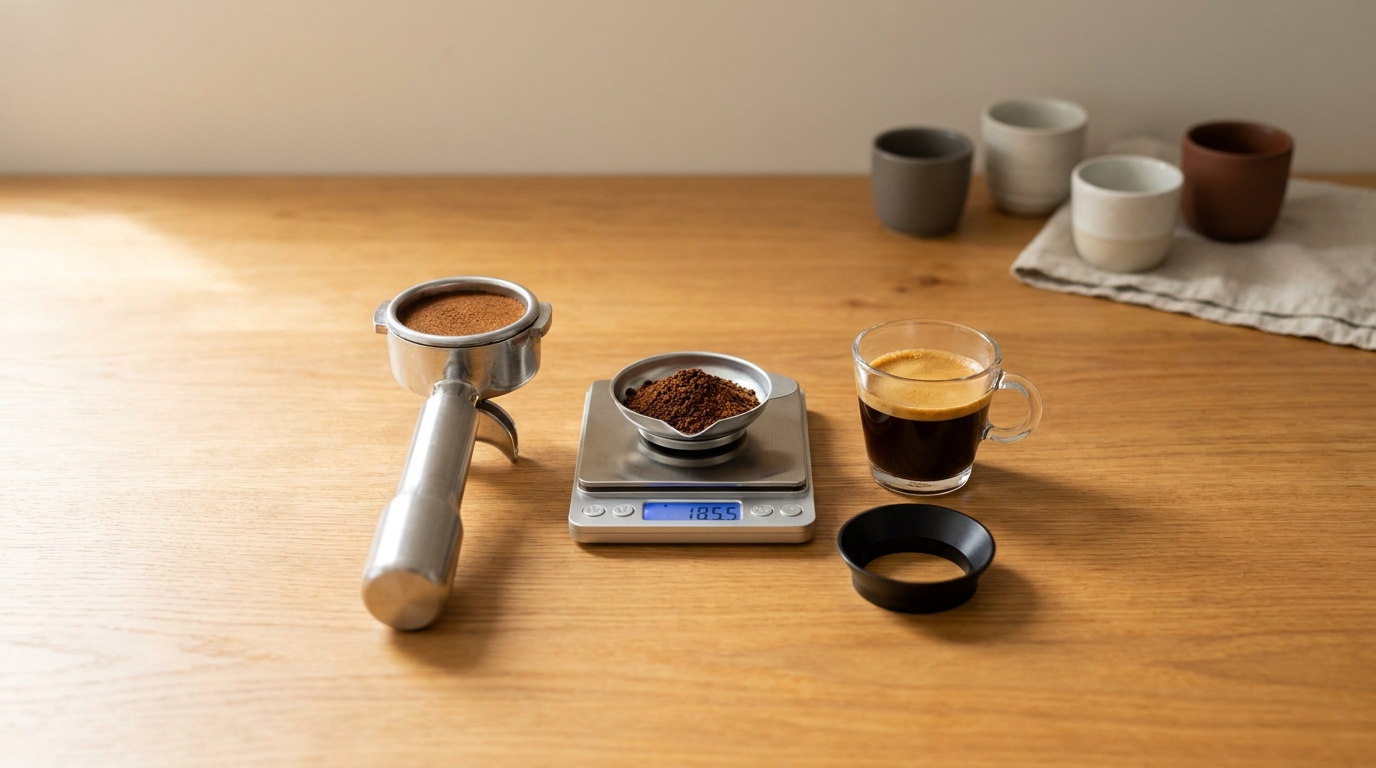
The fastest reliable way to slow an espresso pull is to grind finer and improve puck distribution so the coffee bed offers more even resistance to water. Re-pull with the same dose and a timer/scale and repeat small grind changes until your shot time sits around the typical cafe window, roughly the high‑20s seconds for a double, depending on your recipe Bridge Coffee Roasters: Grind size explained, Crema Coffee Garage: Perfect espresso guide.
Why a pull runs fast (and how channeling makes it worse)
Fast extractions usually mean the puck is offering too little resistance. That can be from a grind that is too coarse, an underdose, or uneven distribution that causes channeling. With channeling, water follows cracks and voids in the puck (the path of least resistance), rushing through parts of the bed while bypassing others, which often tastes thin or sour because parts of the coffee are under‑extracted Wildkaffee: Channeling explained.
A practical dial‑in loop to slow a fast pull
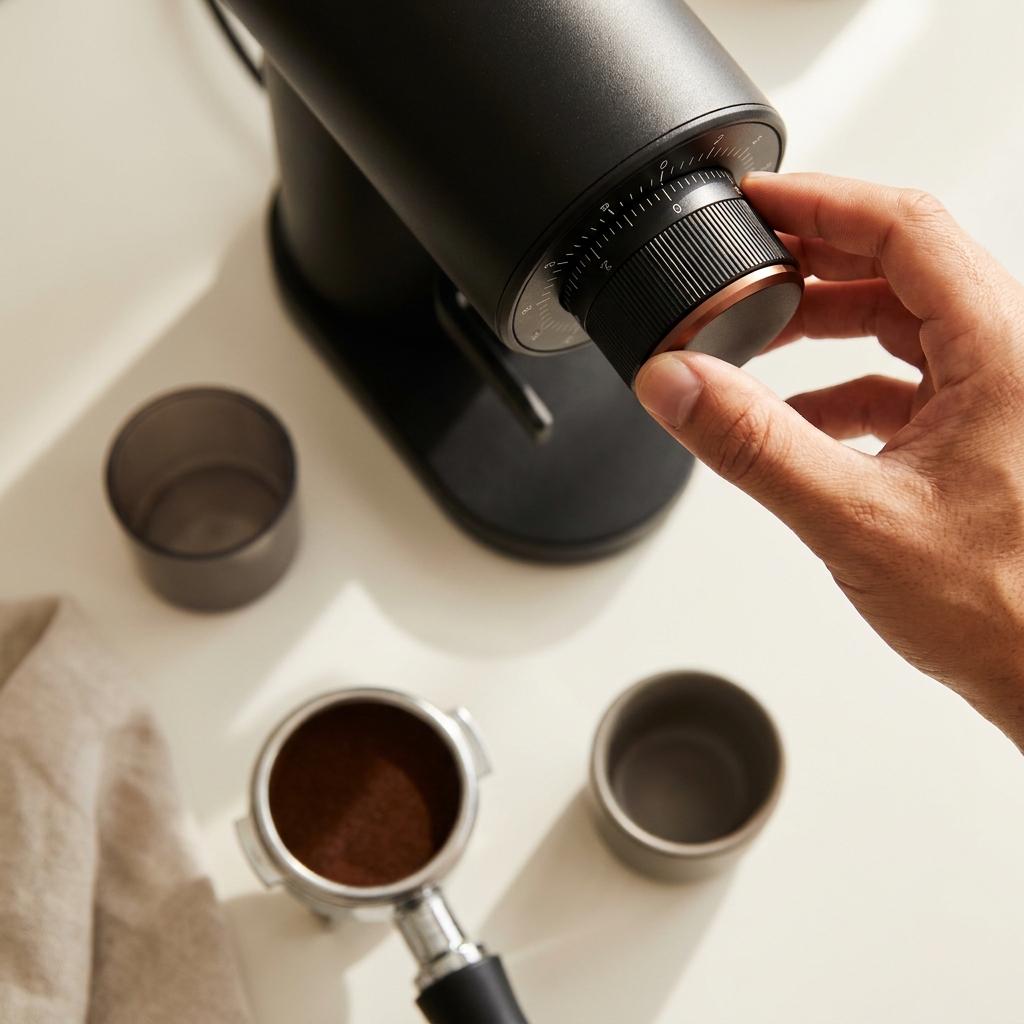
Grind size is your primary control of shot speed: finer grinding increases resistance and slows the flow; coarser speeds it up. Keep dose and tamp consistent while you adjust only the grinder in small steps and measure again Bridge Coffee Roasters: Grind size explained.
- Record dose, target yield and current shot time.
- Adjust one small step finer, purge retained grounds, re-dose and tamp the same.
- Re-pull, time from pump start to stop, and log the result.
- Repeat until your time stabilizes near your target window (for example, many baristas work around 26-30 seconds for an 18 g in / 36 g out double) Bridge Coffee Roasters: Grind size explained, Crema Coffee Garage: Perfect espresso guide.
Worked example: If you dose 18 g and get 36 g out in 18 seconds, go one small grinder notch finer, purge, re-dose 18 g, tamp level, and re-pull. If it lands at 24 seconds, repeat one small step finer. Stop when you consistently hit your chosen window and the taste improves from sharp/sour toward balanced.
Keep variables tight: dose, distribution and tamp
Changing multiple things at once makes troubleshooting impossible. Keep your dose stable and tamp level with consistent pressure. Uneven tamping or bumpy distribution lowers resistance in parts of the bed and invites channeling and fast, uneven flow Crema Coffee Garage: Perfect espresso guide, Wildkaffee: Channeling explained.
Simple distribution fixes to prevent fast, channeled shots
- Gently settle and level the grounds before tamping; avoid hard knocks that can crack the puck Wildkaffee: Channeling explained.
- Use a WDT tool to break clumps and distribute finely ground coffee evenly across the basket. See our explainer: What a WDT tool does for espresso.
- Tamp straight and even. A tilted or uneven tamp can create a fast side channel Crema Coffee Garage: Perfect espresso guide, Wildkaffee: Channeling explained.
If you’re unsure whether channeling is the culprit, a bottomless portafilter lets you see spurts or uneven streams during the pull, which is a classic sign to improve distribution before chasing grind alone Comiso Coffee: What is channeling?.
What about pressure or temperature changes?
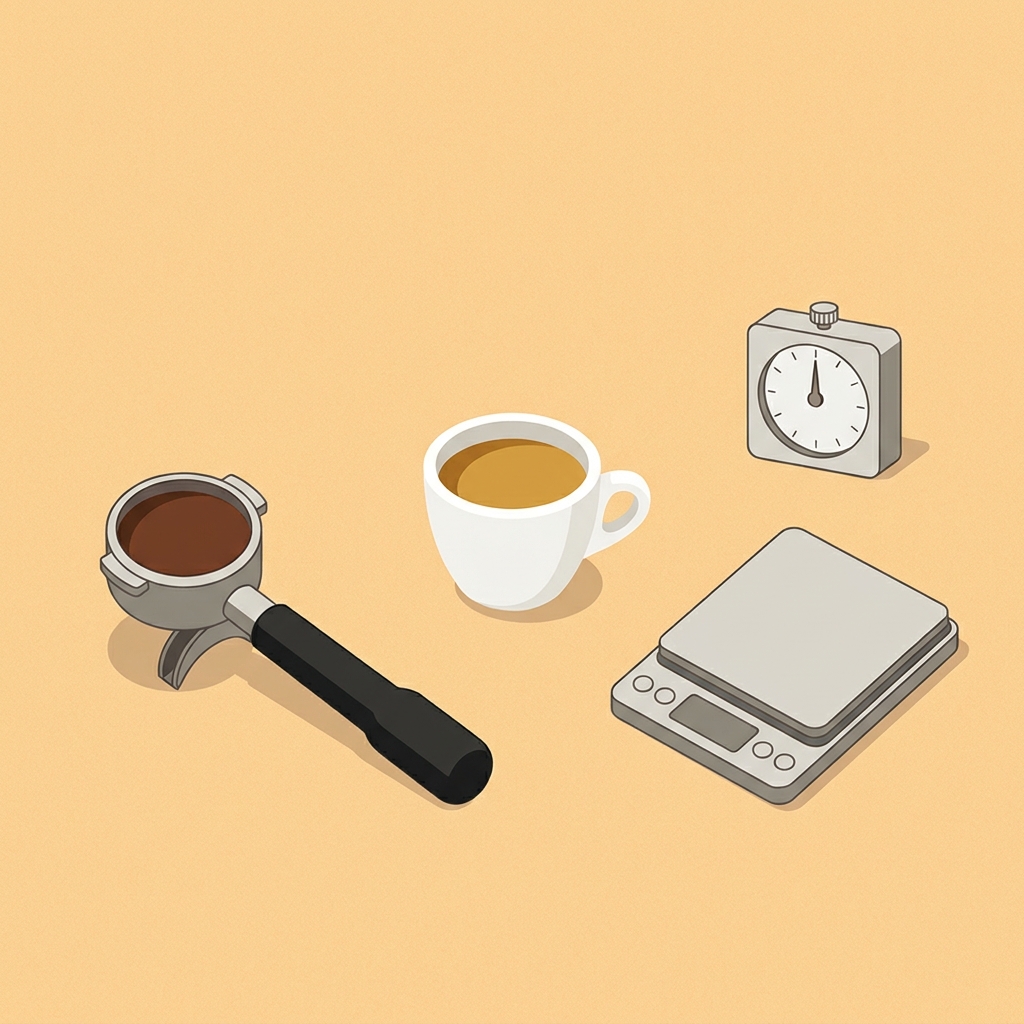
In most setups, you do not need to adjust machine pressure to slow a fast shot. Focus on grind, dose and puck prep first, which are the primary, repeatable levers for flow and extraction time Bridge Coffee Roasters: Grind size explained. Keep your routine stable and your machine clean; stable inputs make timing predictable Crema Coffee Garage: Perfect espresso guide.
Actionable example recipe and targets
Try this as a baseline and adjust taste to preference:
- Dose: 18 g in a double basket; target yield 36 g.
- Grind: Start at your normal espresso setting; if your first shot is under ~26-28 seconds, go one small step finer and re-test Bridge Coffee Roasters: Grind size explained.
- Timing: Count from pump start to pump stop. Include the first few seconds of pre-infusion in the total time if your machine has it Crema Coffee Garage: Perfect espresso guide.
Use a reliable timer/scale to remove guesswork: What is the best coffee scale to use for espresso?.
Slow a fast espresso without creating channeling

Quick FAQ
What is the first change to slow a fast pull?
Grind one small step finer while keeping dose and tamp the same. This increases puck resistance and slows the flow Bridge Coffee Roasters: Grind size explained.
Could channeling be why my shot runs fast even with a fine grind?
Yes. Cracks or voids in the puck let water bypass the bed and rush through. Fix distribution and tamp level to remove weak paths before chasing more grind changes Wildkaffee: Channeling explained.
Optional equipment for this guide
Keep the grinder and machine you already use. A suitable brewing scale can make the measurements in this guide easier to repeat.
As an Amazon Associate I earn from qualifying purchases. These are researched options, not hands-on test results. Check the exact size or model, current price and availability on Amazon.
| Product option | Fit and limits to check | Retailer |
|---|---|---|
| Product imageTimemore Black Mirror Basic 2.0 scale | A scale and timer can record shot yield and time as you adjust a suitable grind setting. Check tray fit; do not treat slower flow alone as proof of a better shot. | View on Amazon |