
The journal
How to use a coffee refractometer step by step
Use a coffee-specific TDS refractometer, follow its calibration and sampling instructions, record repeatable readings and calculate extraction yield with a clear worked example.
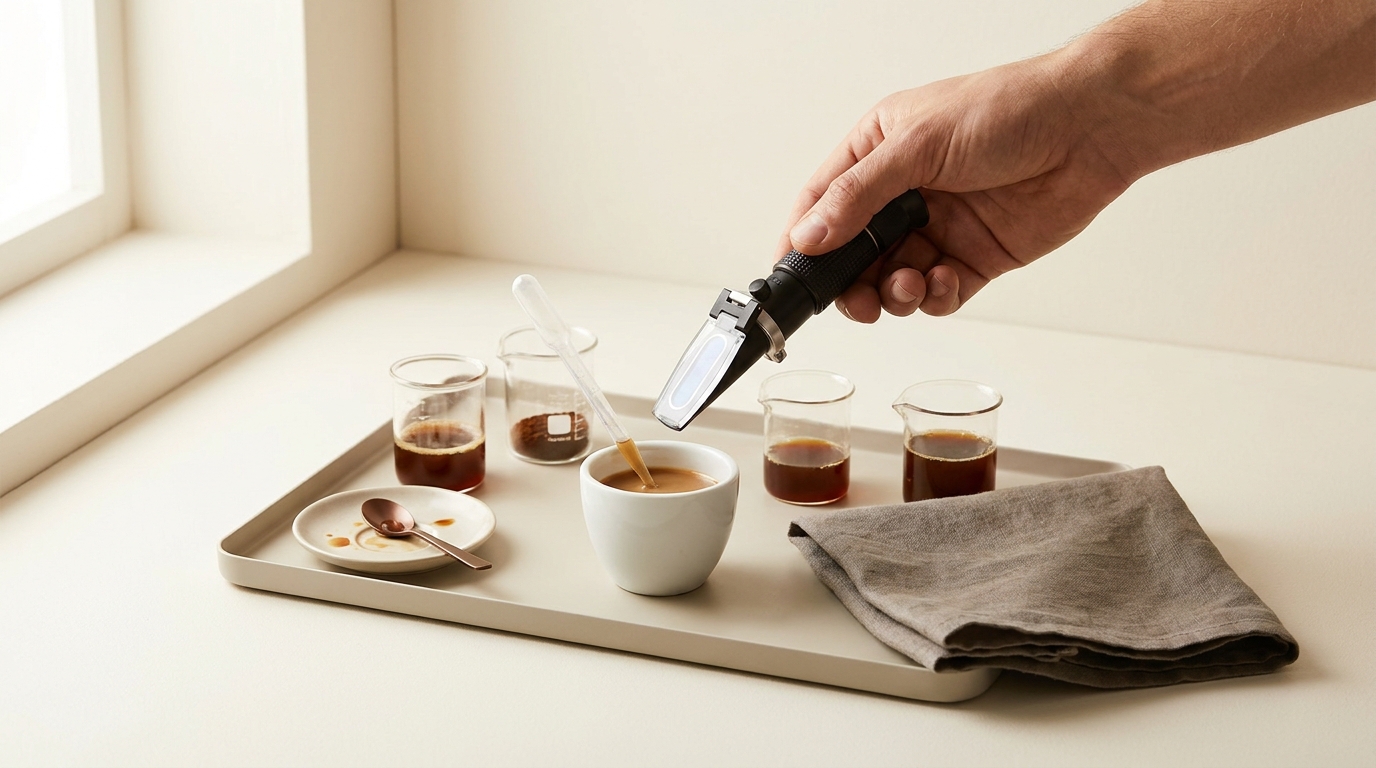
Use a refractometer with a coffee TDS scale, follow that model's zero-check and sampling instructions, measure a representative sample and record the reading with your brew recipe. To estimate extraction yield, you also need the dry coffee dose and the final beverage mass. A TDS reading measures concentration; it does not by itself tell you whether a coffee tastes good.
1. Check the scale and the instrument
Confirm that the display is reporting coffee TDS, not simply a Brix reading. ATAGO sells separate Brix, TDS and dual-scale coffee instruments, so two similar-looking devices need not report the same measurement. Read the exact model name and units before using a recipe or calculator (ATAGO coffee measurement guide).
Make a small record with columns for instrument, date, coffee, dose, beverage mass, TDS and tasting notes. Keeping those fields together makes a changed reading interpretable. Otherwise, a different dose or output mass can look like an unexplained instrument problem.
2. Clean and zero it using the correct manual
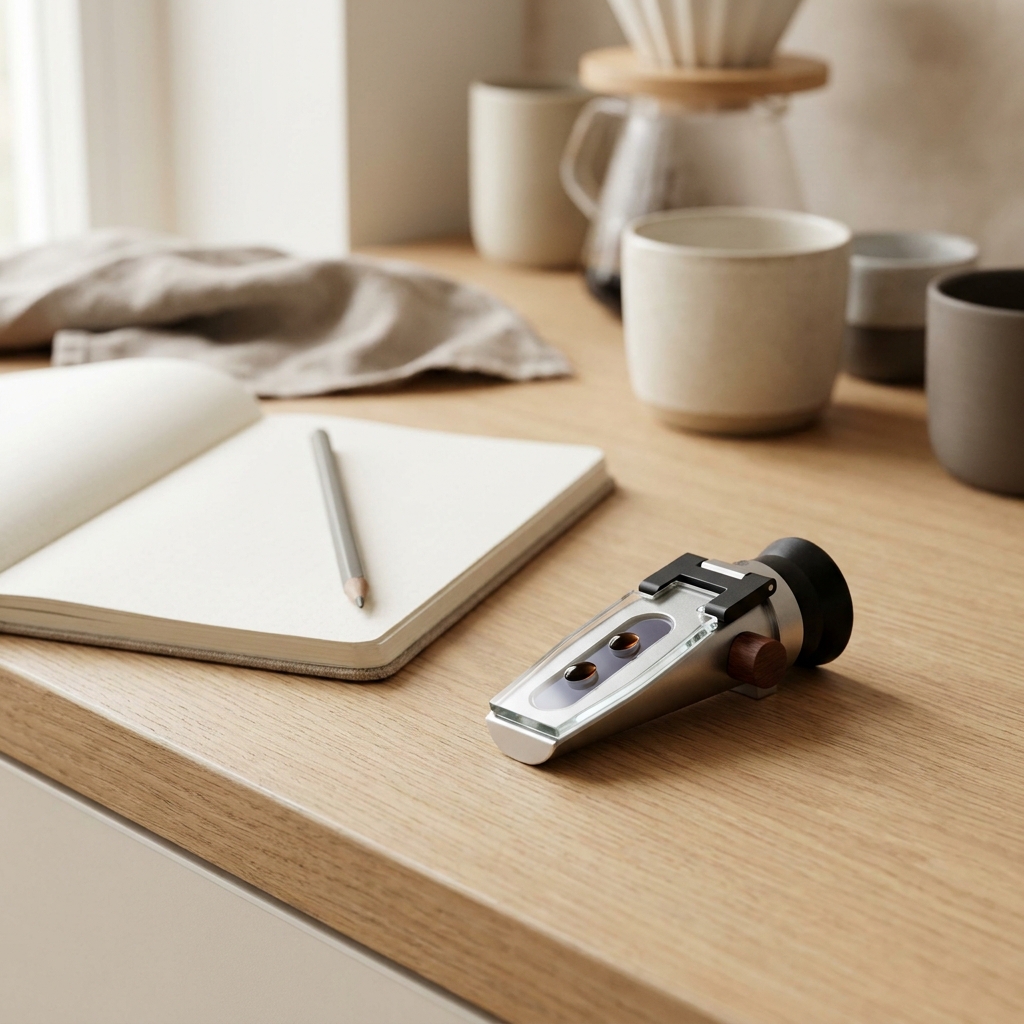
Inspect the sample surface for residue, clean it as the maker permits and carry out the documented zero or calibration check. Use the specified water or solution and temperature conditions. Do not copy a generic wine-refractometer procedure or turn an adjustment screw unless your model actually has one.
Sample volume, temperature handling, cleaning and accuracy are model-specific. For example, the PAL-COFFEE TDS product page specifies a two-to-three-drop sample; this is an example for that device, not a universal amount for every prism or sample well (ATAGO PAL-COFFEE TDS specifications). Resolution is the smallest displayed step; it is not the same as measurement accuracy.
3. Brew, weigh and prepare the sample consistently
Weigh the dry coffee and the finished beverage separately. For a pour-over example, the water poured into the brewer and the coffee collected in the cup are different quantities. Use beverage mass in the calculation below.
Mix the brewed coffee gently before taking a sample so you are not sampling only one layer. Follow the instrument's temperature and sample-preparation procedure; some espresso workflows require additional filtering or degassing. Do not assume automatic temperature compensation makes any hot, foamy or particle-filled sample suitable. The Pocket Science Coffee workflow explains why consistent preparation and repeated measurements matter; it is a specialist's documented workflow, not a replacement for your manual.
4. Read and repeat before interpreting
Apply enough sample for the instrument's specified coverage, avoiding bubbles, and take the measurement as instructed. Record the displayed unit. Repeat with consistent preparation. If readings disagree, check the clean surface, sample uniformity, temperature and zero check before changing your whole brewing recipe.
Keep the individual readings rather than inventing extra precision by averaging wildly different values. Do not describe the last decimal as a meaningful taste improvement without establishing repeatability.
5. Calculate an illustrative extraction yield
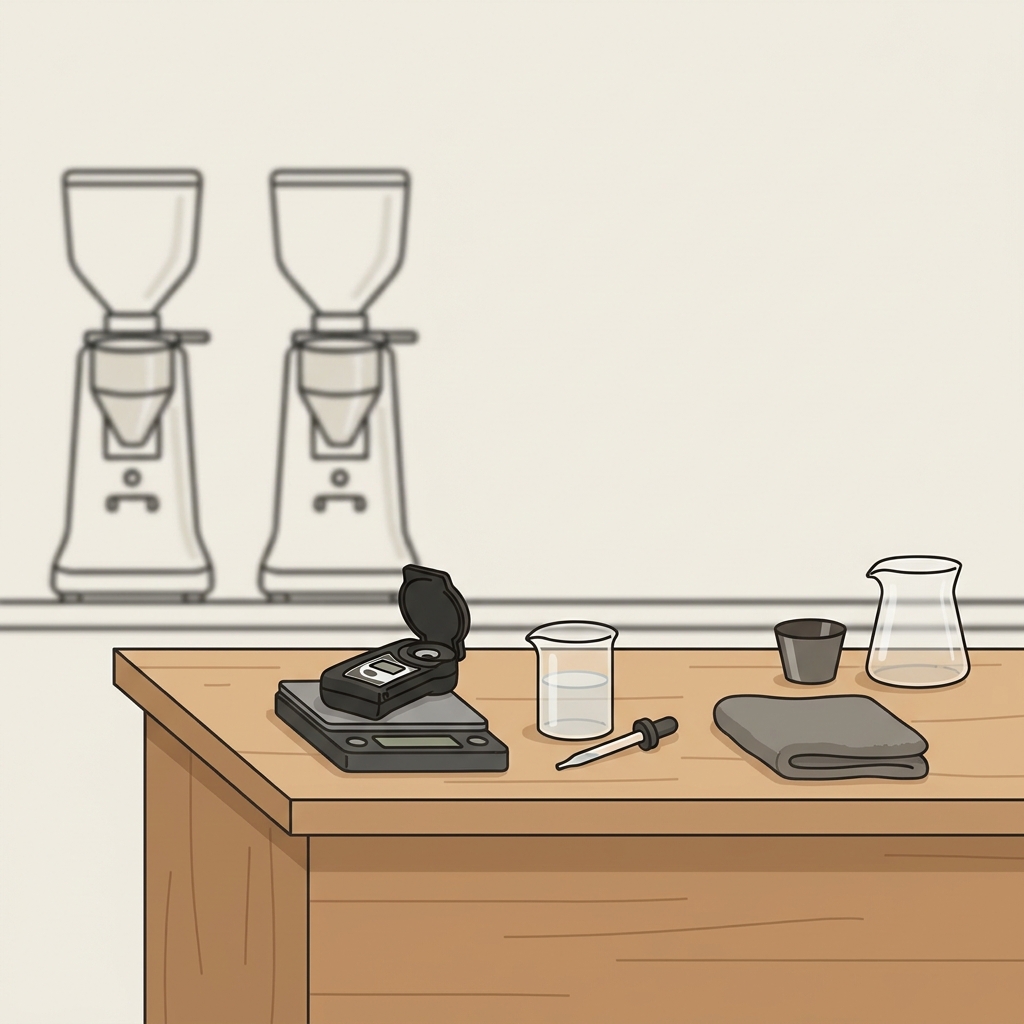
For a simple brewed-coffee estimate, extraction yield (%) equals beverage mass multiplied by TDS (%) divided by dry dose. ATAGO distinguishes the concentration in the drink from the fraction extracted from the beans (TDS and extraction explained).
Hypothetical example: an 18 g dry dose, 300 g beverage and 1.35% TDS give 300 × 1.35 ÷ 18 = 22.5% estimated extraction yield. Those are example inputs, not a result measured by Ground & Gauge and not a universal target. If entering TDS as a decimal instead, 0.0135 is the same concentration; multiply by 100 only once when converting the final fraction to a percentage.
Coffee refractometer session checklist
Use the result to make a useful decision
Change one brew variable at a time and compare a repeatable reading with taste. Learn the measurement distinction in what TDS means in coffee extraction. For reliable mass measurements, see choosing a coffee scale for espresso. Clean and store the instrument by its own instructions; do not apply a blanket rule about rinsing or immersion to every model.

Optional equipment for this guide
Keep the grinder and machine you already use. A suitable brewing scale can make the measurements in this guide easier to repeat.
As an Amazon Associate I earn from qualifying purchases. These are researched options, not hands-on test results. Check the exact size or model, current price and availability on Amazon.
| Product option | Fit and limits to check | Retailer |
|---|---|---|
| Product imageTimemore Black Mirror Basic 2.0 scale | Use a suitable scale to record dry coffee dose and beverage mass for the extraction-yield calculation. This is a brewing scale, not a coffee TDS refractometer. | View on Amazon |