
The journal
How to tell if your espresso basket is pressurized
A quick way to identify pressurized (dual‑wall) vs non‑pressurized (single‑wall) espresso baskets using a simple visual check, plus what to do next.
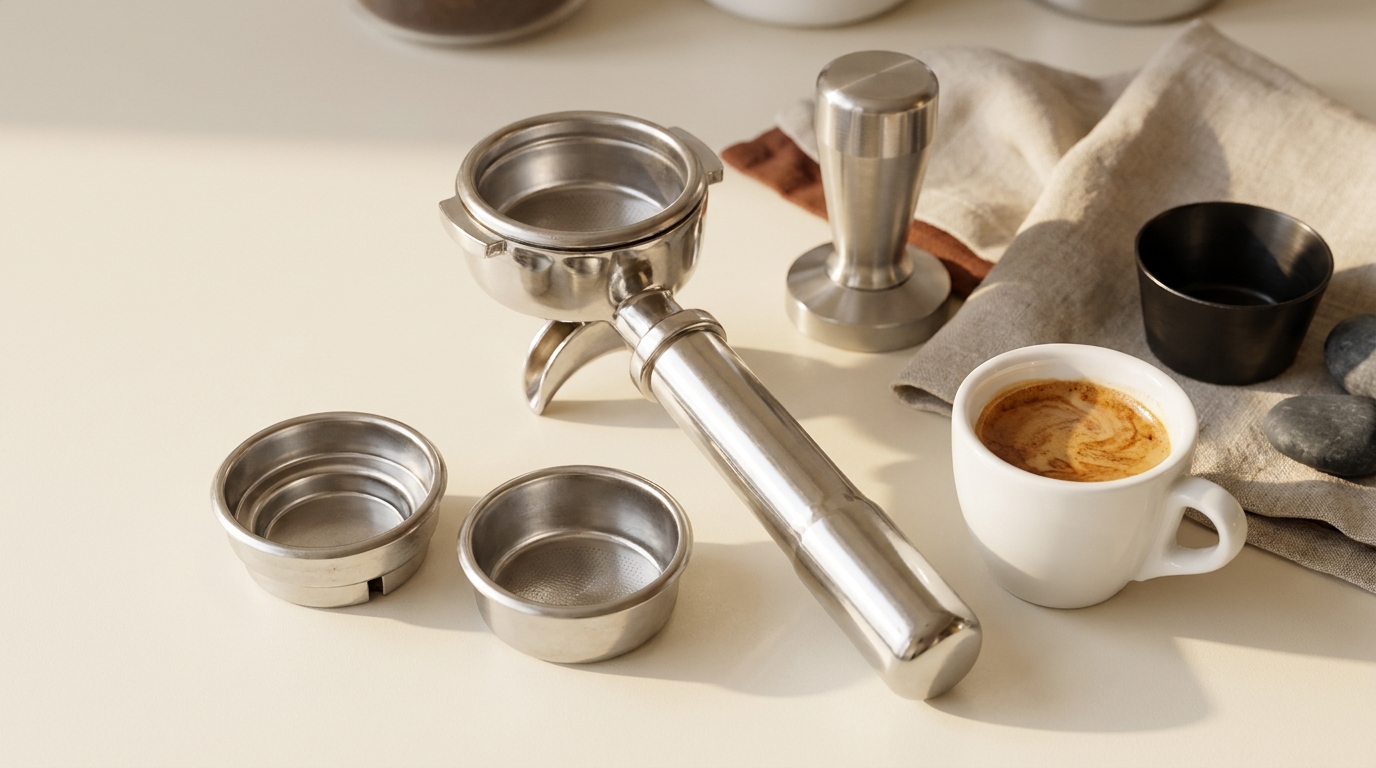
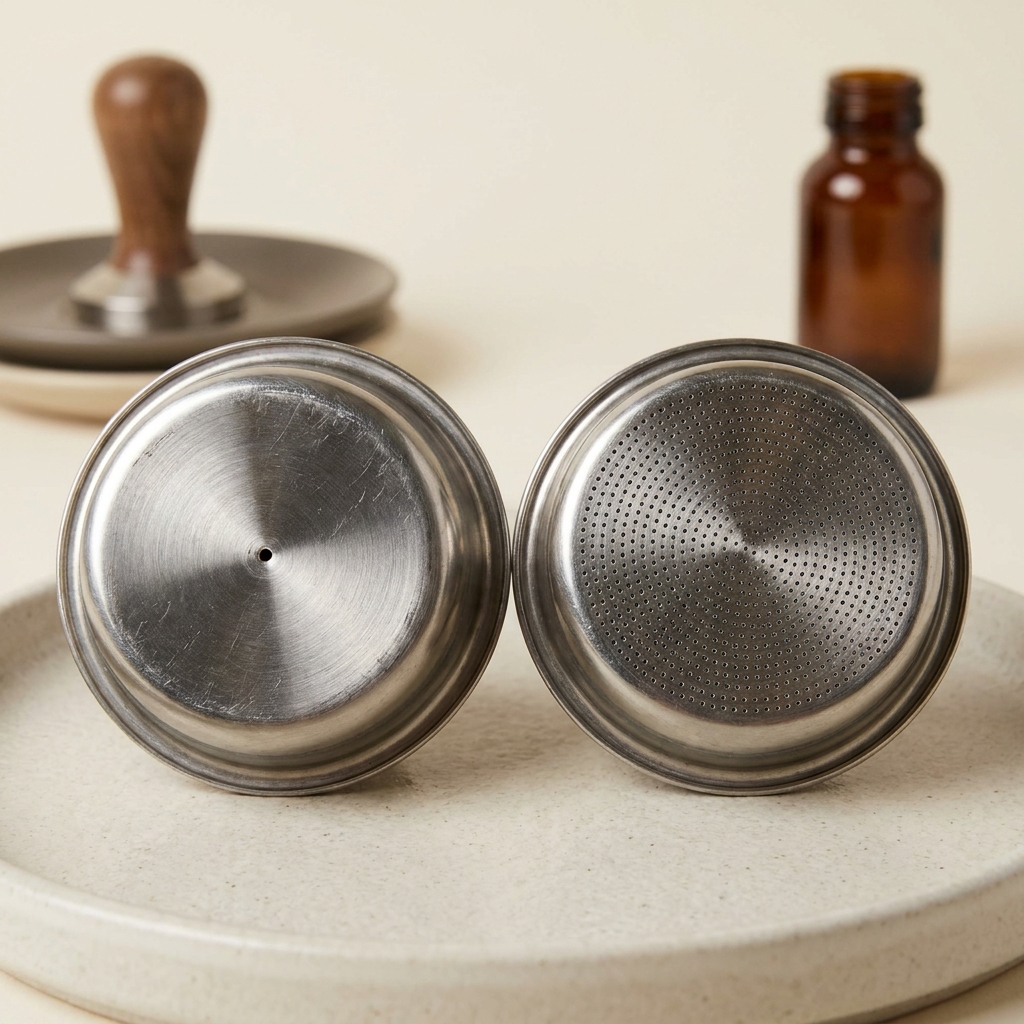
Short answer: remove the basket from your portafilter and flip it over. If the underside shows a single tiny exit hole on the outer base with a separate inner floor of many holes, it is a pressurized (dual‑wall) basket. If the bottom is just one layer covered in many holes, it is a non‑pressurized (single‑wall) basket Breville: pressurized vs non‑pressurized, Homegrounds: how to tell.
What “pressurized” means and why it matters
A pressurized (dual‑wall) basket has two layers: an inner wall with many holes and an outer wall with a very small exit opening. That restricted outlet creates backpressure during brewing and helps compensate for uneven tamping or a coarser or pre‑ground coffee Breville: basket definitions. Non‑pressurized (single‑wall) baskets have one perforated base and rely on your grind size and puck prep to generate resistance for proper extraction Breville: single‑wall explained.
Do this 60‑second visual check
Step‑by‑step
- Remove the basket from your portafilter.
- Flip it over and inspect the underside in good light.
- Pressurized: you’ll see a single tiny outlet on the outside base, while the inner floor (visible from the top) has many perforations. Some dual‑wall designs may have a few tiny outlet holes, but they still use a restricted outer exit compared with the inner wall Breville: key features.
- Non‑pressurized: the bottom you see is the only floor, covered with many holes in a grid pattern Homegrounds: flip test.
Brew‑time clues (secondary)
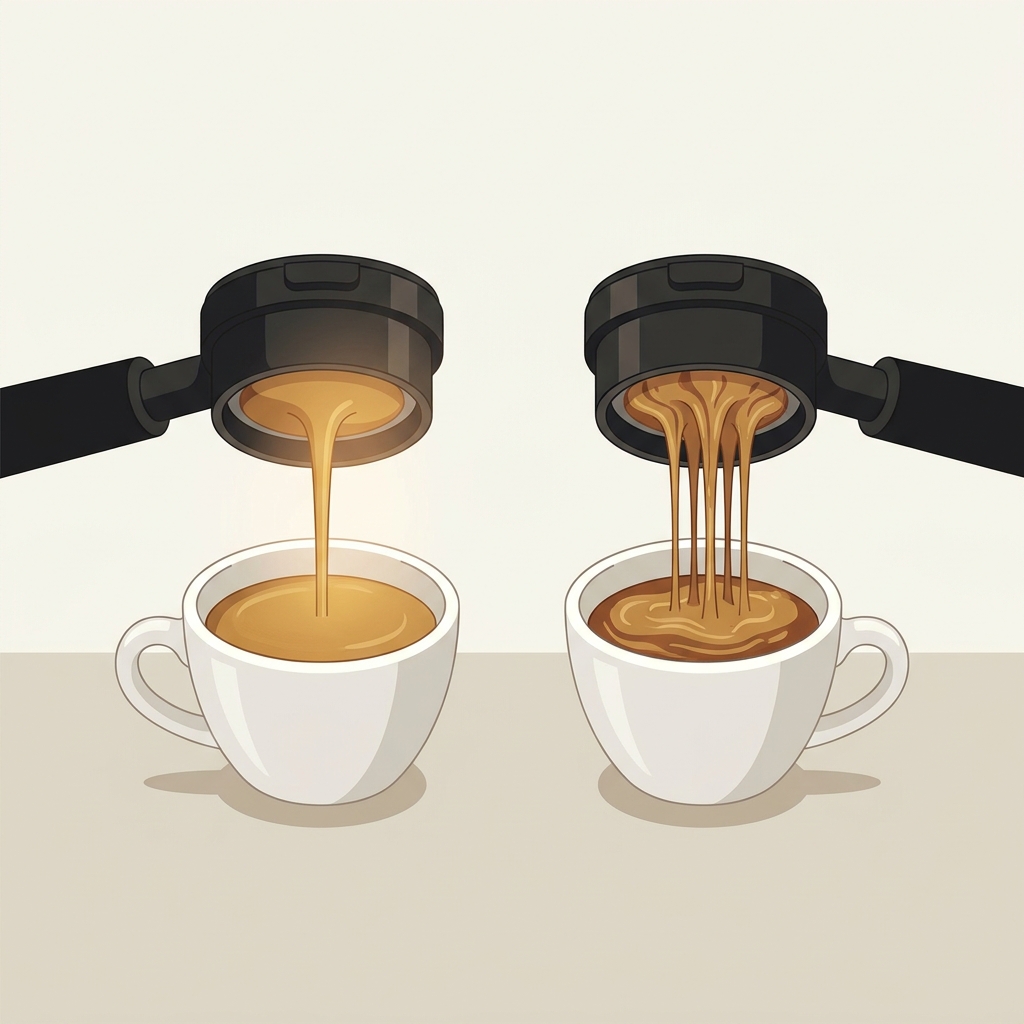
The clearest identifier is the underside check above. If you also use a bottomless (naked) portafilter, you may notice that non‑pressurized baskets often begin as multiple small streams that merge as the shot develops, because liquid exits through many holes. Pressurized baskets force liquid through a restricted outlet, so espresso exits from a single point in the basket Seattle Coffee Gear: dual‑wall outlet, Homegrounds: bottomless context.
What to do after you identify it
If it’s pressurized (dual‑wall)
- Good fit for pre‑ground coffee or basic grinders. The basket’s restricted outlet helps keep flow in range when grind or tamp is imperfect Breville: who it’s for.
- Expect reliable crema appearance, though some of it can be aerated foam from the forced outlet rather than crema purely from puck resistance Seattle Coffee Gear: aerated crema.
If it’s non‑pressurized (single‑wall)
- You’ll get more control and can unlock better flavor with a consistent, fine grind and solid puck prep Breville: control and skill.
- Distribution helps. If you’re dialing in, see our explainer on what a WDT tool does for espresso to reduce clumps before tamping.
- Consistency tools matter. If you’re timing and weighing shots, this guide helps: Do I need a coffee scale for espresso?
Identify your espresso basket: quick checks
Worked example
You remove a basket and spot a single pinhole on the underside, while the inside face has many perforations. That’s a pressurized dual‑wall design. If you’re using pre‑ground coffee, keep using this basket for dependable flow. If you later buy a quality burr grinder and want more control over flavor, swap to a single‑wall basket and improve puck prep to generate resistance in the coffee bed instead of at the basket outlet Breville: switching between types.
FAQ
Can I switch basket types on my machine?
Often yes. Many portafilters accept interchangeable single‑ and dual‑wall baskets, though some machines are designed for one type. Check your model’s documentation Breville: switching.
Are “pressurized,” “dual‑wall,” and “double‑walled” the same?
Yes. These terms describe the same basket design: an inner perforated wall and an outer wall with a restricted exit Breville: terminology.