
The journal
How do I destatic my coffee grinder?
Check the grinder maker’s instructions before adding moisture or using a static-reduction technique. Keep the dosing and cleaning setup appropriate to that model.
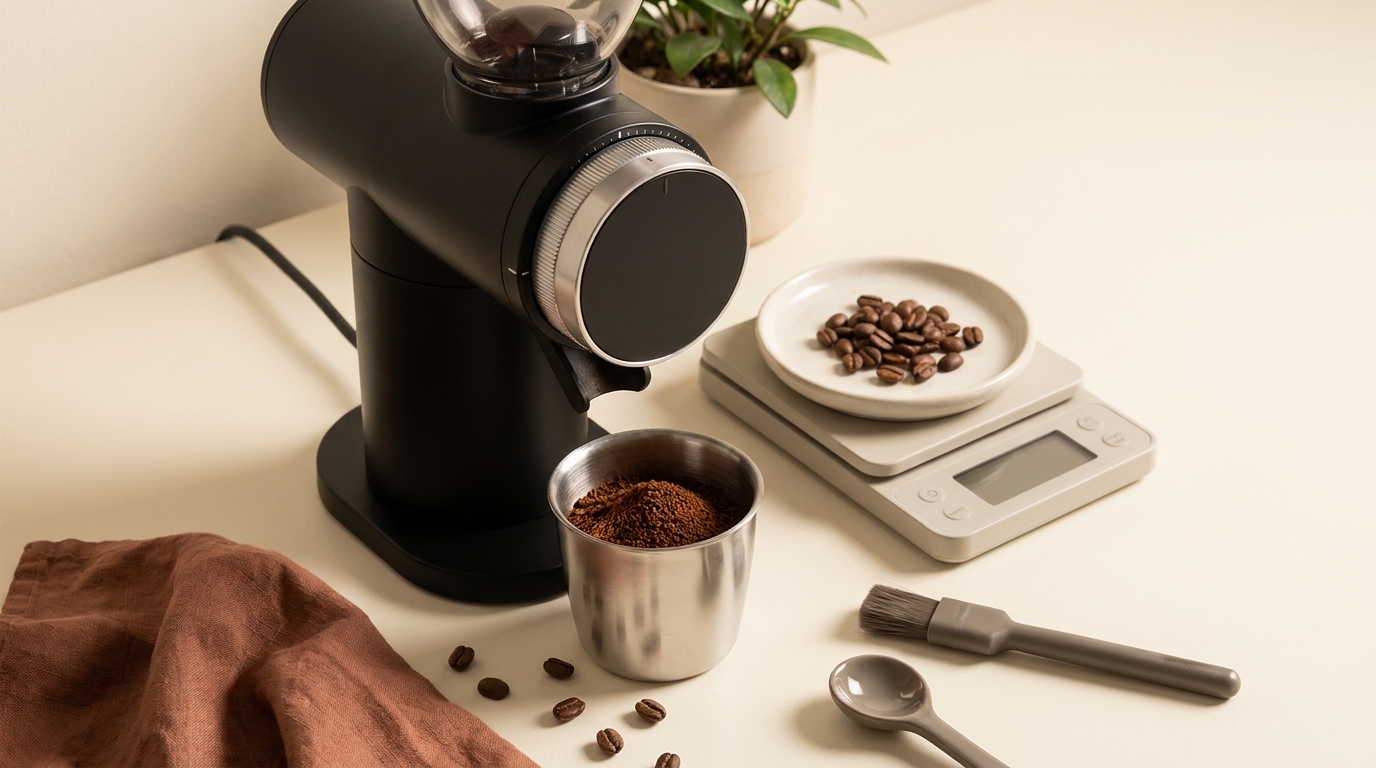
First check the instructions for your grinder. If its maker permits the Ross Droplet Technique (RDT), apply only the specified tiny amount of moisture to a single dose of whole beans immediately before grinding. It markedly reduces static and chaff flyaway in most home setups. Keep moisture tiny and away from grinder internals, and clean the chute and burr area regularly; some grinders also include anti-static ionization that helps a lot. Baratza explains RDT and why dry air and chaff increase static and recommends light, regular cleaning; its care guide notes light roasts can create more static and chaff, and outlines simple cleaning rhythms (Baratza cleaning essentials). If you prefer a no-spray route, consider a grinder with built-in anti-static tech; for example, Tom’s Guide reports “much less static” on a model with ion-generation features (Tom’s Guide review).
Why static happens and when it’s worse
Dry conditions and light roasts amplify cling
Static builds as dry beans and particles rub through the grinder, and it’s worse when the air is very dry. Baratza notes winter heating and low humidity make cling more noticeable, and that the lightweight chaff common with lighter roasts is especially prone to sticking in the bin and chute (Baratza on chaff and static). Their maintenance guide also highlights that light roasts can create more static and chaff than darker, oilier coffees (Baratza cleaning essentials).
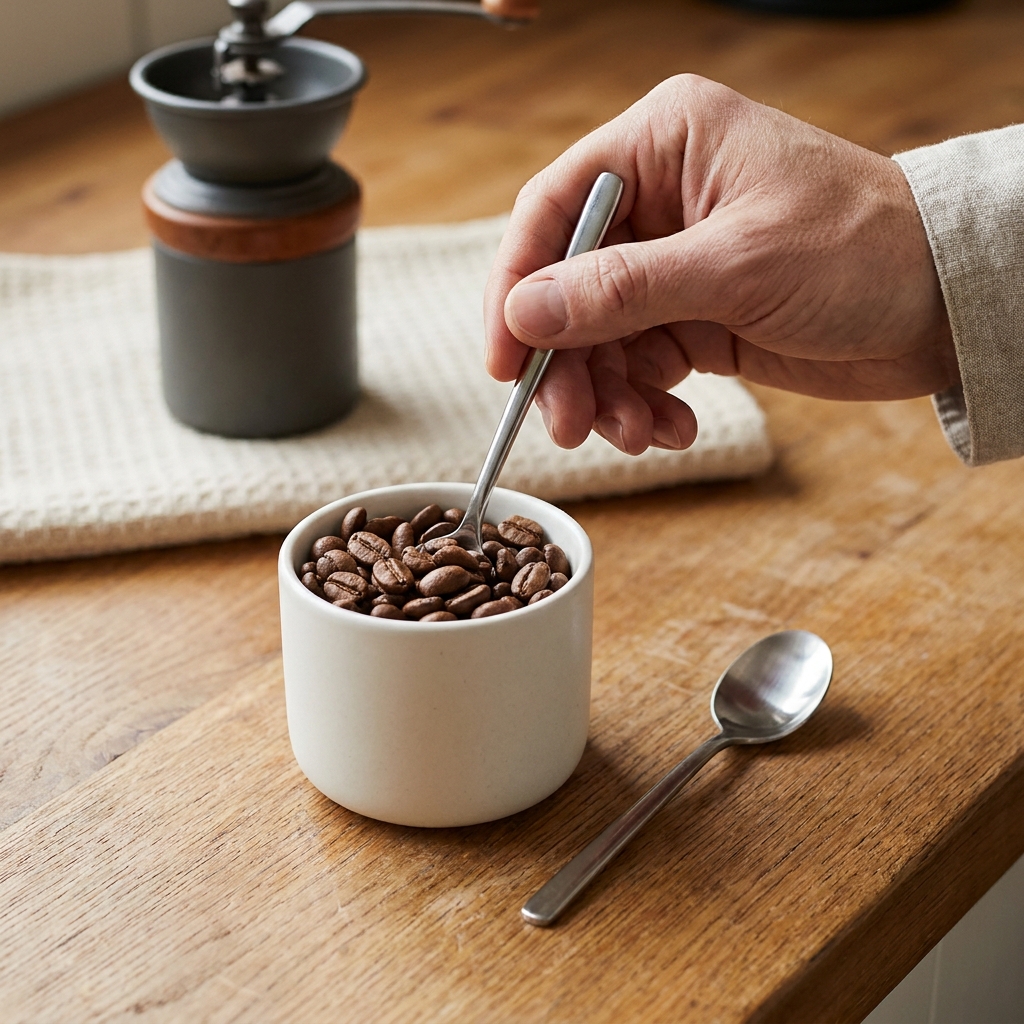
RDT when permitted for your grinder
What to do, step by step
- Weigh your beans for a single grind.
- Add only a trace of water to whole beans: either one fine mist or a spoon handle lightly dipped in water and stirred through the beans.
- Swirl or stir so the tiny moisture spreads, then grind immediately.
Baratza describes this Ross Droplet Technique and stresses the goal is not to wet the coffee, but to apply one or two drops so grounds and chaff don’t leap and cling (Baratza on chaff and RDT).
Safety notes when using any moisture
- Keep the amount minimal and apply it to whole beans before grinding, not into the grinder parts.
- Avoid getting water on burrs, motors or inside the grinder body; Breville’s cleaning guidance says to keep burrs dry; do not confuse that cleaning instruction with permission to spray water inside a grinder (Breville grinder care).
No-spray options that help
Pick gear with anti-static features
Several modern grinders add anti-static or ionization features to reduce cling at the chute. Tom’s Guide reported “much less static” on a grinder that introduces ions to neutralize charge compared with its predecessor lacking that tech (Tom’s Guide review).
Keep the chute and burr chamber clean
Old fines, oils and chaff build up in the grind chamber and exit path, worsening mess and increasing the risk of clogs. Brush out the burr area and chute routinely and wash the hopper and bin; Baratza suggests a simple at-home clean roughly every 4-6 weeks, more often with darker roasts (Baratza cleaning essentials). Keep all metal burrs dry and follow your maker’s instructions for disassembly and any cleaning tablets you choose to use (Breville grinder care).
A quick example to copy
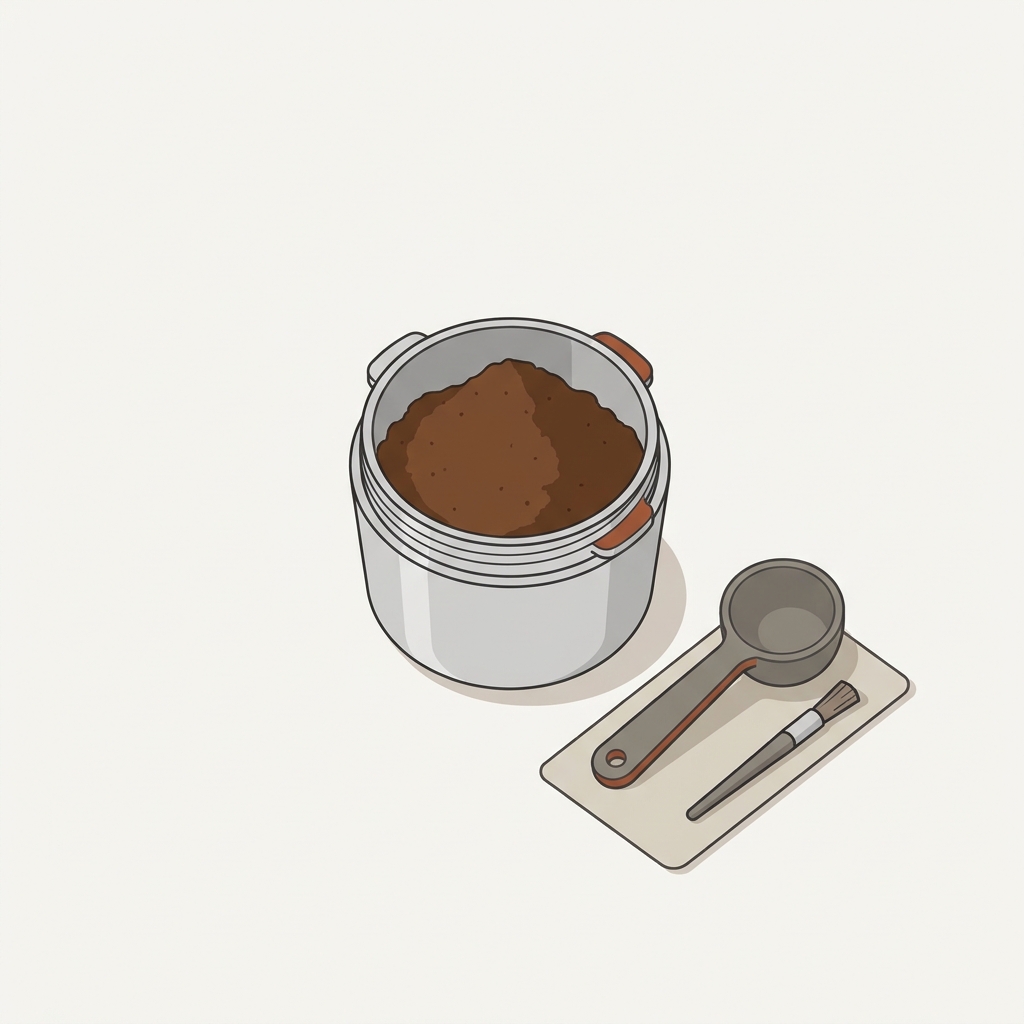
Say you single-dose 18 g of a light-roast filter coffee on a dry winter morning. Before grinding, give the beans a single, very fine mist, swirl to distribute, then grind immediately. Compare the mess with your usual dry dose rather than assuming a particular improvement (Baratza on chaff and RDT). If you rarely want to spray, consider a grinder that specifies anti-static or ionization in its design (Tom’s Guide review).
Put this into practice
Check the grinder maker’s moisture instructions before trying any static-reduction method. Keep the dose and workflow consistent during a comparison, and do not add liquid to equipment that does not permit it.
Destatic your grinder: a quick checklist
Useful related reading on Ground & Gauge
Frequently asked questions
Is RDT safe for my grinder?
Used correctly, RDT applies only a trace of moisture to whole beans just before grinding, not to the grinder’s internals. Keep burrs and the machine dry, and follow your manufacturer’s care instructions (Breville grinder care) and Baratza’s guidance on using only a drop or two (Baratza on chaff and RDT).
Why do light roasts make a bigger mess?
They often carry more papery chaff, which is extremely light and responds strongly to static; Baratza notes light roasts can create more static and chaff than darker roasts (Baratza cleaning essentials) and that dry winter air worsens cling (Baratza on chaff and static).