
The journal
How can I clean a metal coffee filter?
Remove grounds, follow the maker’s rinse and cleaning instructions, and check compatibility before using a cleaner. Espresso baskets and puck screens need their own care guidance.

Remove the grounds and clean the filter according to its manufacturer’s instructions. For an espresso basket, a hot-water rinse is a useful routine where the maker specifies it. Deeper cleaning depends on the material, finish and design. Do not assume that a mesh pour-over filter, espresso basket and puck screen all permit the same chemical treatment.
Breville’s Bambino portafilter and filter-basket guide describes care for that equipment. It is a concrete example of maker guidance, not an instruction manual for every reusable coffee filter. Find the care page for your exact model before choosing a detergent, soak or dishwasher cycle.
After the equipment has cooled enough to handle
Remove the filter through its normal, specified removal method. Keep your hands clear of hot metal and hot water. Empty the grounds into the appropriate waste container, then rinse as directed. Use only the soft cleaning tools your maker permits. Avoid pushing a sharp object into a fine mesh or enlarging a perforation to remove a blockage.
Inspect the clean filter in good light. Look for trapped grounds, residue and damage, then let it dry according to the care instructions. A visual check is useful, but it does not establish that a filter has its original flow rate or that every hidden passage is clear.
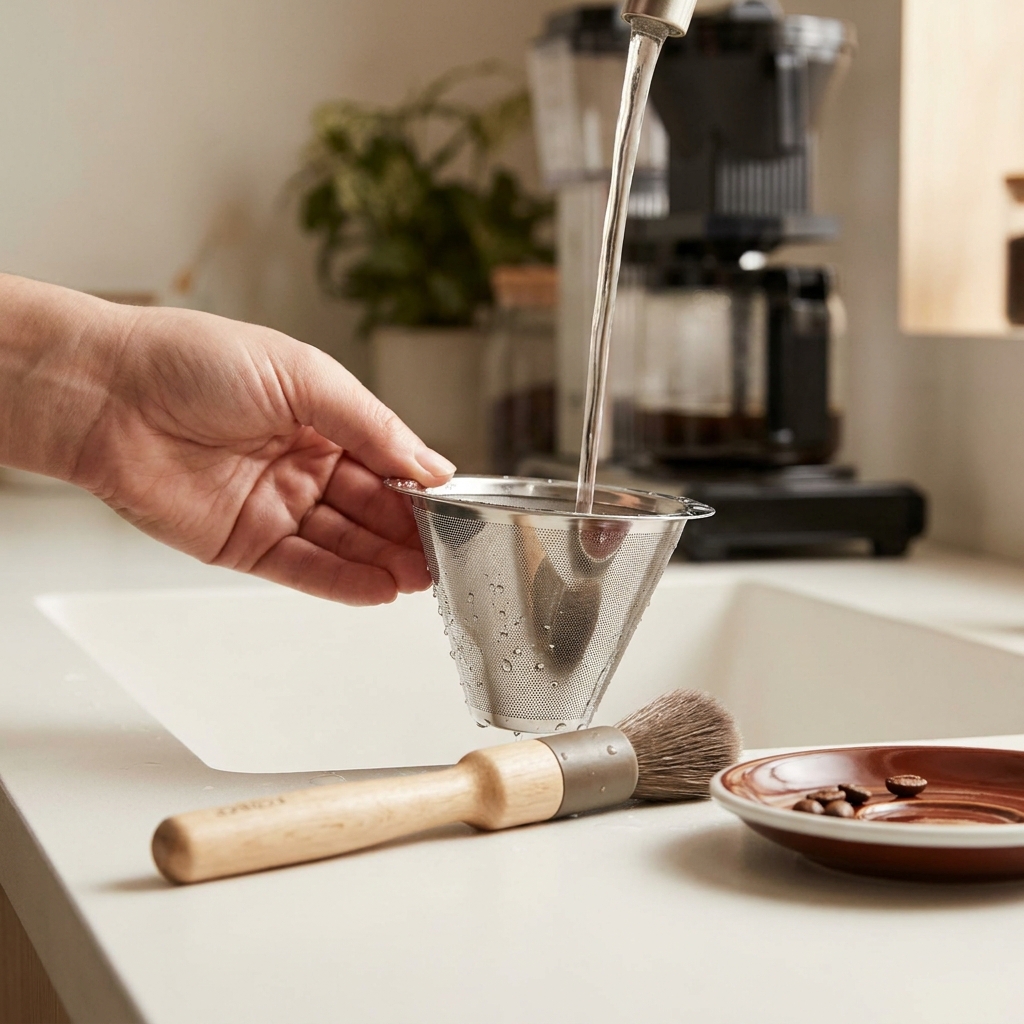
When rinsing is not enough
Use the deeper-cleaning procedure specified for the product. Check the cleaner’s compatibility, dilution, contact time and rinsing instructions. Do not invent a longer soak or a stronger concentration because stains remain. A product intended for an espresso machine is not automatically approved for every coating, adhesive or reusable filter.
Breville’s cleaning and maintenance material is a starting point for supported equipment. If the maker gives no permitted cleaner or the instructions are unclear, ask its support team. This guide does not prescribe baking soda, vinegar, bleach or a universal soaking time for all metal filters.
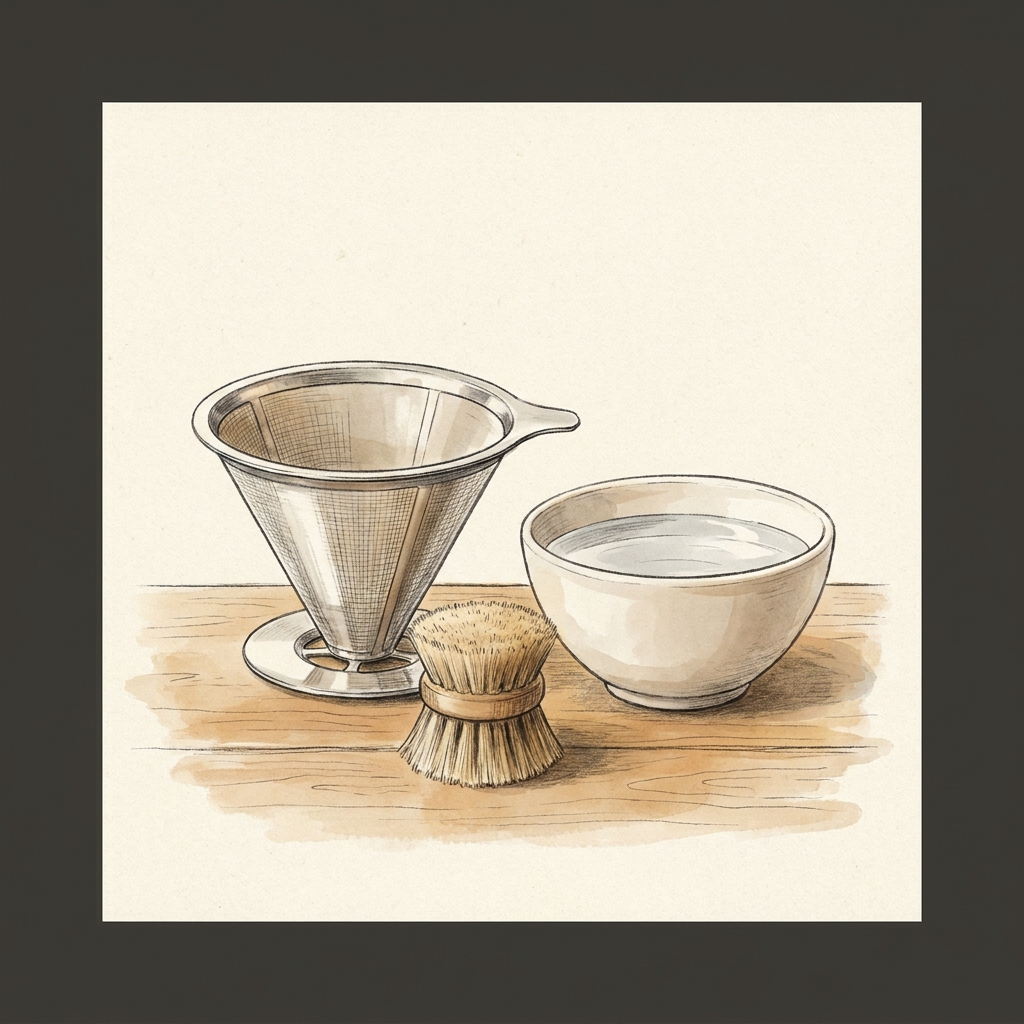
What about an espresso puck screen?
Read the screen maker’s own cleaning and removal instructions. A basket-care guide does not prove that a separate screen tolerates the same cleaner or dishwasher cycle. Handle the screen only when safe to do so and avoid bending it. If it catches in the basket, use the intended removal method rather than levering sharp tools against the mesh.
Replace a damaged component according to the maker’s guidance. Persistent residue or changed brewing behaviour is a reason to recheck the cleaning instructions and the rest of the setup, not evidence that a stronger household mixture is needed.
Put this into practice
Identify the filter material and the maker’s cleaning method before soaking it. Record which deposits remain after an allowed cleaning step; do not keep increasing cleaner strength without checking compatibility.
Before cleaning a reusable filter
How often should I clean it?
Follow the equipment’s routine rather than waiting for a fixed number of bad-tasting cups. Your cleaning frequency and permitted maintenance depend on the product and how it is used. Record which treatment you tried if you need support. That is more useful than assuming that every filter should be replaced after the same period.